


Read Time: 11 minutes
Table of Contents
Introduction
87% of customers believe that a good customer experience is created by a company responding to issues quickly with 74% saying fast issue resolution is critical, and 64% finding value in reaching the organization on the channel of their choosing. This research from Verint highlights how crucial it is for companies to provide quality customer service. Enterprises are no longer being judged based on product or price, they are evaluated on the speed, quality, and consistency of their support. This is why customer service operations are now being looked at as a way to beat the competition while simultaneously helping with growth.
If you are wondering how scaling operations while keeping the costs down could even be possible, the answer lies in building a customer service operations management strategy.
Key takeaways
- Customer service operations unify people and technology to provide scalable support.
- A strong support operations framework is key to delivering measurable outcomes.
- Enterprises are shifting toward proactive customer operations powered by AI and analytics.
- Outsourcing makes scaling customer support effortless.

What is Customer Service Operations Management?

Customer service operations management is the practice that ensures every customer interaction from start to finish is supported. It provides the structure for organizations to ensure every customer is taken care of regardless if the organization is handling a few hundred inquiries or millions across global markets.
You might be thinking it’s the same as customer service, but there is a slight difference. While customer service itself is visible through agent interactions, the operational layer beneath it determines how efficient, consistent, and scalable those interactions are. Effective customer service operations management can help companies get rid of some of the hurdles that come with creating a meaningful customer experience while still keeping costs down.
Defining the Scope of Customer Support Operations.
In modern enterprises, customer support operations connect insights across departments such as product development, marketing and sales.
The full scope of these customer operations include:
- Intake and Routing Management: Designing how customer inquiries enter the system and are directed to the appropriate team or agent.
- Knowledge Management: Creating and maintaining internal and external knowledge bases to ensure accurate responses.
- Workforce Enablement: Training, onboarding, and equipping agents with the tools and information they need to succeed.
- Quality Assurance: Monitoring interactions, scoring performance, and ensuring adherence to brand and compliance standards.
- Performance Monitoring: Tracking KPIs like CSAT, FCR, and AHT to find trends and areas of improvement.
- Process Optimization: Continuously refining workflows to improve efficiency.
- Cross-Functional Feedback Loops: Sharing customer insights with all departments to inform business decisions.
In order to avoid a breakdown in the system there needs to be a cohesive approach to these areas. Clearly defining the scope of customer support operations in an organization will enable companies to build a strong foundation for customer support.
The Shift from Reactive Support to Proactive Customer Operations.
Typically customer support is very reactive. Customers complain and agents rush to put it out and make sure there is no other fallout. This model is still necessary however, it is no longer sufficient in a day where customer expectations are higher than ever.
The companies that are staying ahead of the competition are ones that are adopting proactive CX operation strategy models. They are using data and technology to help anticipate customer needs and resolve problems before they escalate.
Predictive analytics also plays an important role in shifting toward a proactive approach. Analyzing historical data and behavioral patterns not only reveals any potential issues, but can be used to forecast demand so resources are used in a better way. Workforce management tools further elevate this by ensuring the right number of agents are available at the right time.
Of course when we talk about taking a proactive approach automation comes into the picture. AI-powered chatbots and virtual assistants are great for taking basic tasks of human agents’ workloads, so they can work on more complex issues. The team gets the assistance they need to stay on top of things and the customer experience naturally improves from there.
Defining the operational scope is just the beginning. The real impact of customer service operations comes from turning these processes into a proactive framework.
Want to scale your business?
Global Response has a long track record of success in outsourcing customer service and call center operations. See what our team can do for you!
Core Pillars of a Customer Service Operations Framework
Building a scalable and efficient customer service operations framework requires a bit more than some basic tools and integrations. The framework should be a combination of people, technology, and data that work together so every customer interaction is aligned with business goals.
These pillars set the stage for creating operational excellence. For example, technology empowers agents to work smarter and harder, workforce management is there to make sure the right resources are available to meet demand, and data analytics provide a clearer understanding of what needs to improve.
Focusing on these core pillars is how an organization can create a resilient support ecosystem. The following sections explore each pillar and show how they contribute to a cohesive support operations framework.
Technology Stack and Tooling.
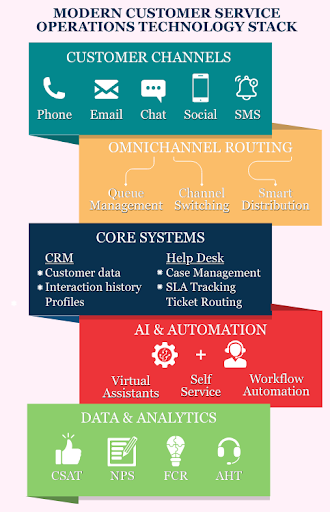
It’s no secret that cx technology is a major factor in providing memorable customer support, but without the right implementation and integration it becomes practically useless. Tools like CRM systems, help desk platforms, communication channels, and analytics software are great assets, but can become an obstacle if not used correctly.
A well-designed technology stack will allow data to smoothly flow across a variety of systems to agents so they can access complete customer information in real-time. Omnichannel capabilities further improve the customer experience by enabling more personalized support wherever customers reach out.
AI is also a part of the technology stack to handle repetitive tasks and high-volume inquiries. This is great for improving response times and providing agents with extra assistance when it gets busy. However, it’s crucial that AI and automation are implemented with the purpose to elevate human interactions and human agents, rather than replace them. Especially when it comes to customer support operations; AI and the human touch should be balanced.
Organizations that prioritize integration and usability are in a better position to get the full benefits that come with the support operations framework.
Workforce Management and Capacity Planning.
Customer volume fluctuates throughout the year and can be affected by product launches, holidays, and seasons. Workforce management helps maintain balance within customer service operations by providing enterprises with the number of agents needed to meet demand without overextending resources.
Predictive analytics can help with this process by looking at historical data, trends, and external factors to predict potential fluctuations in support volume. This means that staff levels can be adjusted proactively and customers don’t have to wait in long queues for assistance.
Another benefit of this pillar is its ability to balance the work so no single agent or group is overwhelmed. Agents are sometimes even cross-trained which allows for more flexibility in industries with diverse customer needs.
Maintaining this level of agility internally can be tough which is why many organizations are turning to outsourcing. Partnering with a third-party helps companies access a well-trained, scalable workforce. It helps organizations meet demands without the long-term commitments that come with internal hiring.
Data Analytics and Performance Metrics.
Without data customer operations would not be able to contribute to business success. KPIs are how companies understand what is working and what isn’t and where to go from there.
The most effective customer service operations management strategies focus on a few key metrics that provide insight into performance and customer experience:
- Customer Satisfaction (CSAT) and Net Promoter Score (NPS) to measure experience quality
- First Contact Resolution (FCR) to measure efficiency
- Cost Per Resolution to assess operational effectiveness
- Average Handle Time (AHT) to monitor productivity
All of these metrics analyzed together provide a better understanding of performance. For example, a reduction in AHT might seem like a good thing, but if it leads to lower CSAT then it might indicate a need for further adjustments.
Analytics tools are great for seeing how performance is doing in real-time, so organizations can quickly respond to emerging trends. This feedback loop is crucial for keeping performance levels high and ensuring there is always continuous improvement.
Establishing these core pillars is essential, but using them effectively at scale often requires a delivery model that extends beyond internal resources.
Implementing Customer Service Operations in a BPO Environment
Customer service operations management can be difficult to handle all alone. Moving these services to a BPO creates a partnership that benefits both your employees as well as customers. Done right, a BPO will be able to help you scale, maintain and improve quality, and adapt to changing business needs.
When you are looking to transition things to a BPO provider there are a few things to keep in mind:
| Choose the Right Partner: | Look for a provider that really understands your industry and has experience in it they can show to you via case studies. They should also be able to scale staff based on demand and show a history of delivering consistent results. |
| Connect Your Systems: | Make sure things like CRM, ticketing, chat, and phone platforms are fully integrated. This keeps workflows running smoothly and ensures customer data is located in one place. |
| Set Clear Expectations with SLAs: | Agree on response times, resolution targets, and escalation paths. SLAs are here to make sure everyone is on the same page and goals are being met. |
| Quality Assurance: | Regular monitoring and reporting ensure your customers are getting the right experience. QA is how you deliver consistent service that exceeds expectations. |
| Invest in Training: | Take the time to onboard and continuously train BPO agents. The more knowledge they have, the better they can serve your customers. |
| Track Performance and Share Insights: | Use dashboards to monitor KPIs because these help keep everyone on the same track and help leaders make more informed decisions. |
| Focus on Continuous Improvement: | The best BPOs are the ones that look for opportunities to improve systems and create a better customer experience. |
Experienced BPO providers like Global Response work hard to improve your operations so they are scalable and optimized for customer satisfaction.
Real-World Applications and Results
The pandemic affected the success of businesses world wide, even top leaders like a global athletic brand known for being at the top of their industry. This event caused their customer support operations to become overwhelmed, with tens of thousands of inquiries going unanswered. Global Response was able to partner with them and get them headed on a path to success.
Our strategies included:
- Rapid team scaling: We were able to expand the support team quickly to help manage high volumes without sacrificing quality.
- Omnichannel coverage: Cross-trained agents across voice, email, and chat for improved customer experience.
- Proactive insights: Our access to advanced analytics tools helped us identify trends and anticipate issues before they escalated.
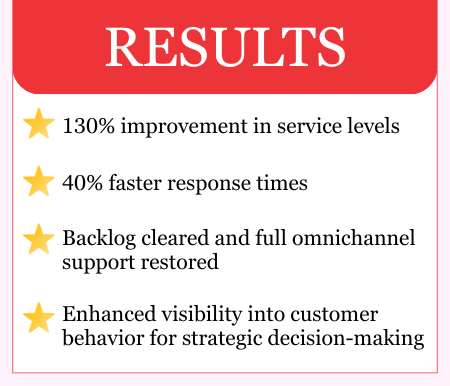
By acting as a seamless extension of this brand, we resolved immediate challenges and built a resilient support engine ready for growth.
Effective customer service operations transform how businesses engage with customers. As the case study shows, partnering with a trusted BPO like Global Response makes it possible to turn support operations into a true competitive advantage.
FAQs
What is the difference between customer service and customer service operations?
Customer service refers to the direct interaction between agents and customers. Customer service operations however, encompass the infrastructure behind those interactions. This includes systems, processes, workforce planning, and analytics to ensure service is delivered consistently. Basically, customer service is what the customer experiences, whereas customer service operations is what makes that experience possible.
How does customer service operations management impact ROI?
The impact on ROI is both immediate and long-term. Efficient customer service operations reduce costs by reducing inefficiencies, while also increasing revenue via improved customer satisfaction. In addition, organizations that invest in a strong support operations framework are able to scale without proportional increases in cost.
What tools are essential for customer operations?
A robust customer operations toolkit combines CRM, omnichannel support, workforce management, automation, and analytics. These technologies empower teams to provide faster service while being able to scale effortlessly.
Why do large businesses outsource customer support operations?
Large companies outsource to make scaling easier, reduce costs, leverage expertise that most BPO providers have, and so they can free up internal teams to work on higher-impact work.
What are the key KPIs for customer service operations?
- The key KPIs for customer service operations include customer satisfaction (CSAT), net promoter score (NPS), first contact resolution (FCR), average handle time (AHT), and cost per resolution.